
Frenectomy in Tirana, Albania
A small procedure with a significant impact — freeing the tongue, closing the gap between teeth, protecting the gums, and unlocking function that a restrictive frenum has been quietly limiting. Quick, virtually painless, and long-lasting.
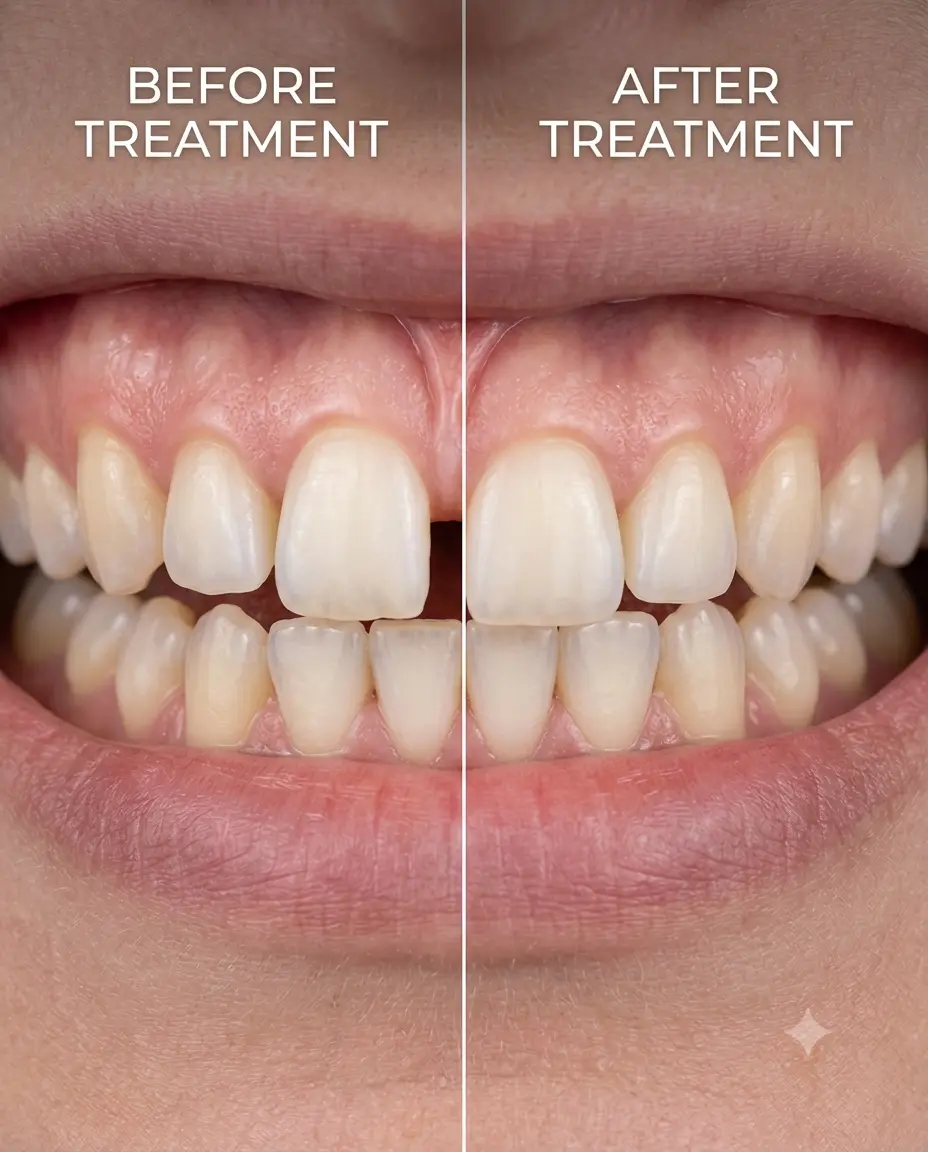
What is a frenum, and when does it cause problems?
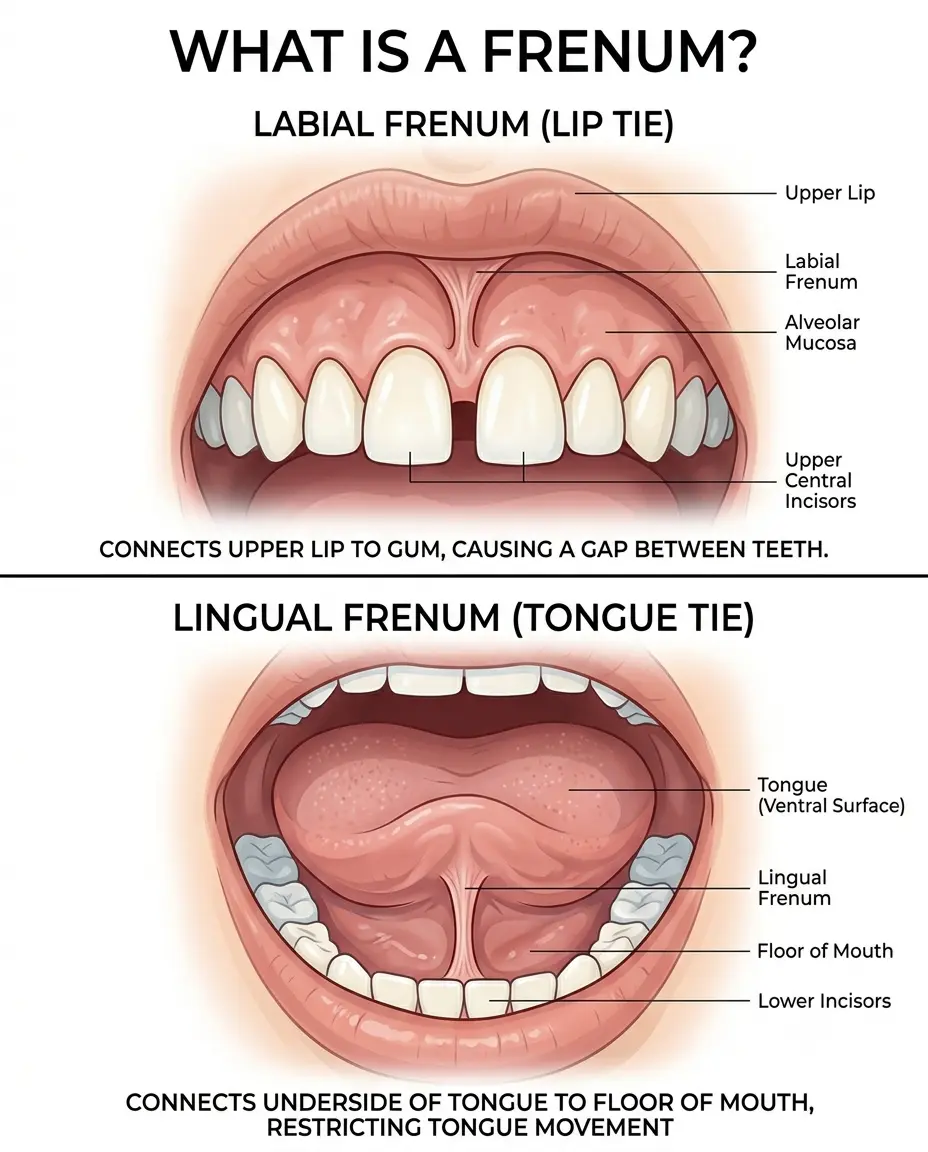
A frenum (plural: frena) is a small fold of soft tissue that connects a movable structure — the lip or tongue — to a fixed one. In the mouth there are several frena, but two are clinically significant: the lingual frenum, which connects the underside of the tongue to the floor of the mouth, and the labial frenum, which connects the upper or lower lip to the gum between the front teeth.
When a frenum is short, thick, or attaches too close to the teeth, it restricts normal movement — causing problems that range from difficulty breastfeeding in infants to a visible gap between teeth, gum recession, or speech difficulties in adults. A frenectomy removes or releases this tissue, restoring normal function.
- Quick, minimally invasive procedure — usually under 30 minutes
- Local anaesthesia — painless during the procedure
- Heals in 1 to 2 weeks with minimal restrictions
- Suitable for all ages — infants through adults
- Often coordinated with orthodontic treatment
- Permanent result — the frenum does not grow back
Tongue-tie and lip-tie — two different problems, one solution
The two clinically significant frenectomies are lingual (tongue) and labial (lip). Each has different indications, different age groups most commonly affected, and different functional impacts — but both are addressed with the same simple, quick surgical release.
Lingual Frenectomy — Tongue-Tie Release
The lingual frenum connects the underside of the tongue to the floor of the mouth. When it is short or tight (ankyloglossia), it restricts tongue movement in ways that affect feeding, speech, and oral function.
Indications
- Difficulty breastfeeding in infants — poor latch, slow feeding, maternal nipple pain
- Speech difficulties — sounds requiring tongue elevation (L, R, T, D, N, S) are affected
- Restricted tongue elevation — cannot touch the roof of the mouth or protrude the tongue beyond the lower teeth
- Notched or heart-shaped tongue tip when protruded
- Difficulty with certain foods — licking, swallowing, or manipulating food in the mouth
- Orthodontic relapse — tongue pressure can reopen closed gaps
Labial Frenectomy — Lip-Tie Release
The labial frenum connects the upper or lower lip to the gum between the central incisors. A high or thick attachment causes a midline gap between the front teeth (diastema) and can pull on the gum tissue.
Indications
- Diastema (gap between upper front teeth) caused by a frenum attached between the teeth
- Gum recession or tissue blanching — frenum pull creates traction on the gum margin
- Orthodontic treatment — gap closed by braces or aligners tends to reopen if frenum is not released
- Denture instability — high labial frenum displaces denture flanges
- Difficulty cleaning — food accumulation in the frenum fold
- Infants with poor lip seal during feeding
Frenectomy at every stage of life
Frenum problems affect all age groups — but the presentation, motivation, and timing of treatment differ significantly between infants, children, and adults.
The feeding years
Tongue-tie is the most common indication in infancy. The frenum prevents the tongue from cupping around the nipple, causing poor latch, inefficient feeding, and maternal nipple trauma.
- Poor breastfeeding latch
- Excessive wind and colic from air swallowing
- Slow weight gain due to feeding difficulties
- Newborn — the earlier the release, the faster the feeding improvement
Speech and teeth development
In children, lingual ties may affect speech development — particularly sounds requiring tongue elevation. Labial frenectomy is often timed around orthodontic treatment to prevent diastema from recurring.
- Speech therapy not progressing due to restricted tongue
- Gap between upper front teeth appearing or persisting
- Coordinated with braces or aligner treatment
- Best timing: after orthodontic gap closure
Aesthetic and functional concerns
Adults seek frenectomy most often for aesthetic reasons (closing a midline gap), to support orthodontic stability, or to address gum recession caused by frenum traction.
- Persistent gap between front teeth
- Orthodontic treatment — before or after
- Gum recession caused by frenum pull
- Denture instability or discomfort
What happens during a frenectomy
A frenectomy is one of the most straightforward minor oral surgical procedures — typically completed in under 30 minutes and requiring minimal recovery.
Clinical Evaluation & Diagnosis
A short assessment identifies the type and severity of the frenum attachment — its position, thickness, and the degree of restriction it causes. For labial frenectomy cases, we assess the existing space between the teeth and coordinate with any planned orthodontic treatment to determine the ideal timing. For lingual frenectomy, tongue mobility is assessed by range-of-motion tests.
Local Anaesthesia
A small amount of local anaesthetic is injected into the frenum area — or, for infants, a topical anaesthetic gel may be used for a brief lingual release. Within a minute the area is completely numb. The procedure itself is painless. For young children or anxious patients, the procedure can be performed with additional sedation if needed.
Frenum Release
The frenum tissue is precisely incised and removed or released using a surgical technique chosen for the specific case. The incision is oriented to maximise the range of movement gained. For deeper or thicker frena, a Z-plasty or diamond-shaped excision may be used to ensure the wound does not tighten back to its original position during healing. The site is typically closed with a few fine dissolvable sutures.
Recovery Instructions & Exercises
Recovery is quick — most patients eat normally within 24 hours and experience only mild soreness for 2 to 3 days. For lingual frenectomy, a series of tongue stretching exercises is prescribed to maintain the range of movement gained and prevent the wound from contracting during healing. These exercises are demonstrated at the appointment and continued at home for 4 to 6 weeks.

Why timing with orthodontic treatment matters
For labial frenectomy combined with orthodontic diastema closure, the sequence of treatment is critical. Performing the frenectomy before orthodontics allows the scar tissue to form across the midline — potentially resisting gap closure. Performing it after the gap is closed maintains the closure and prevents relapse.
At Kocaqi Dental, both orthodontic and surgical treatments are available in-house — we coordinate the timing precisely so frenectomy and aligner or brace treatment work together rather than against each other.
Frenectomy Cost in Albania
Frenectomy is one of the most affordable procedures in our clinic — a straightforward intervention with significant functional and aesthetic impact. All prices include the procedure, local anaesthesia, sutures if needed, and post-operative instructions.
| Procedure | Kocaqi — Tirana | Western Europe avg. | Saving |
|---|---|---|---|
| Lingual Frenectomy (Tongue-Tie Release) | from €80 | €200 – €500 | ~70% |
| Labial Frenectomy (Lip-Tie / Diastema) | from €80 | €200 – €500 | ~70% |
| Frenectomy + Clear Aligners (diastema package) | Get a quote | €1,500 – €3,500 | ~65% |
| Frenectomy + Composite Bonding | Get a quote | €500 – €1,200 | ~65% |
Prices include local anaesthesia, the procedure, and dissolvable sutures where needed. For cases requiring coordination with orthodontic treatment, a full combined quote is provided. All costs confirmed before treatment begins.
Why patients choose Kocaqi for frenectomy
All Ages — Infants to Adults
We perform frenectomies across the full age range — from newborn tongue-tie releases to adult labial frenectomies combined with orthodontic treatment. The technique and approach is adapted to the patient's age, cooperation level, and specific anatomy.
Orthodontic Coordination In-House
Because we offer clear aligners and orthodontic treatment in-house, frenectomy and diastema closure are fully coordinated by the same team — with timing decided clinically, not administratively.
Same-Day Procedure
For most patients, consultation and frenectomy are completed in the same visit. For dental tourists, the procedure can be incorporated into a treatment trip that includes other cosmetic or restorative work — no separate trip needed for a standalone frenectomy.
Correct Surgical Technique
A frenectomy that simply cuts the visible frenum without addressing the underlying fibrous attachment can heal back to its original position. We use the appropriate surgical technique — including Z-plasty where indicated — to achieve permanent, stable results.
Post-Operative Exercise Protocol
For lingual frenectomy, post-operative stretching exercises are essential to prevent the wound from contracting and reducing the mobility gained. We demonstrate and prescribe a specific exercise protocol at the appointment — a step many clinics omit.
From €80 — Outstanding Value
Frenectomy in Western Europe typically costs €200 to €500. At Kocaqi Dental the same procedure starts from €80 — often combined with a broader treatment visit so there are no additional travel costs specifically for the frenectomy.
Frenectomy — your questions answered
Is a frenectomy painful?
The procedure is performed under local anaesthesia and is painless during surgery. Post-operative discomfort is typically mild — comparable to a mouth ulcer — and resolves within 3 to 5 days. Over-the-counter pain relief (paracetamol or ibuprofen) is usually sufficient. Most patients eat and drink normally within 24 hours, though hot and very spicy foods are avoided for the first few days while the wound heals.
How long does frenectomy take to heal?
The surgical site typically heals within 1 to 2 weeks. Dissolvable sutures disappear within 7 to 10 days. For lingual frenectomy, post-operative stretching exercises are continued for 4 to 6 weeks to prevent the wound from contracting. The result — improved tongue or lip mobility — is immediately apparent and permanent once healed.
At what age should tongue-tie be treated?
Ideally, as early as the problem is identified. For infants with breastfeeding difficulties, a lingual frenectomy performed in the first weeks of life can immediately improve feeding. For children with speech difficulties, the optimal window is before speech patterns become entrenched — typically 3 to 5 years, following assessment by a speech and language therapist. In adults, tongue-tie release is effective at any age, though speech therapy may be beneficial concurrently to retrain articulation patterns.
Will frenectomy close my gap between teeth?
Frenectomy alone will not close a diastema — it removes the cause of the gap and prevents it from recurring, but does not move the teeth. Orthodontic treatment (clear aligners or braces) closes the gap; the frenectomy is then performed after gap closure to maintain the result. In small residual gaps, composite bonding can address the aesthetics without orthodontics.
Can frenectomy be done on the same day as consultation?
Yes — in most cases. For straightforward lingual or labial frenectomies in adults and older children, the assessment and procedure can be completed in a single appointment. For infants, the procedure is typically quick enough that it is also same-session. Cases requiring coordination with orthodontic treatment are planned in advance, but the surgical component itself is same-day.
Can a frenectomy grow back?
The frenum tissue itself does not grow back after a correctly performed frenectomy. However, if the procedure is too superficial — removing only the visible tissue without addressing the underlying fibrous attachment — the wound can heal with scar tissue that gradually tightens back toward the original position. This is why surgical technique matters: a properly performed frenectomy, with Z-plasty or adequate depth where indicated, produces a permanent result.
Quick, comfortable, and permanent — book your consultation
Whether you are addressing a tongue-tie, closing a gap between teeth, or protecting your gums from frenum pull — we can assess and treat in a single visit. Contact us with photos or a description of your concern for a free assessment.
From €80 · Children & adults · Same-day procedure · Coordinated with orthodontics · Save 70%