
Jaw Surgery in Tirana, Albania
Corrective jaw surgery — orthognathic surgery — permanently resolves severe bite problems, jaw asymmetry, and skeletal discrepancies that braces and aligners alone cannot fix. A life-changing procedure at significantly lower cost than Western Europe.
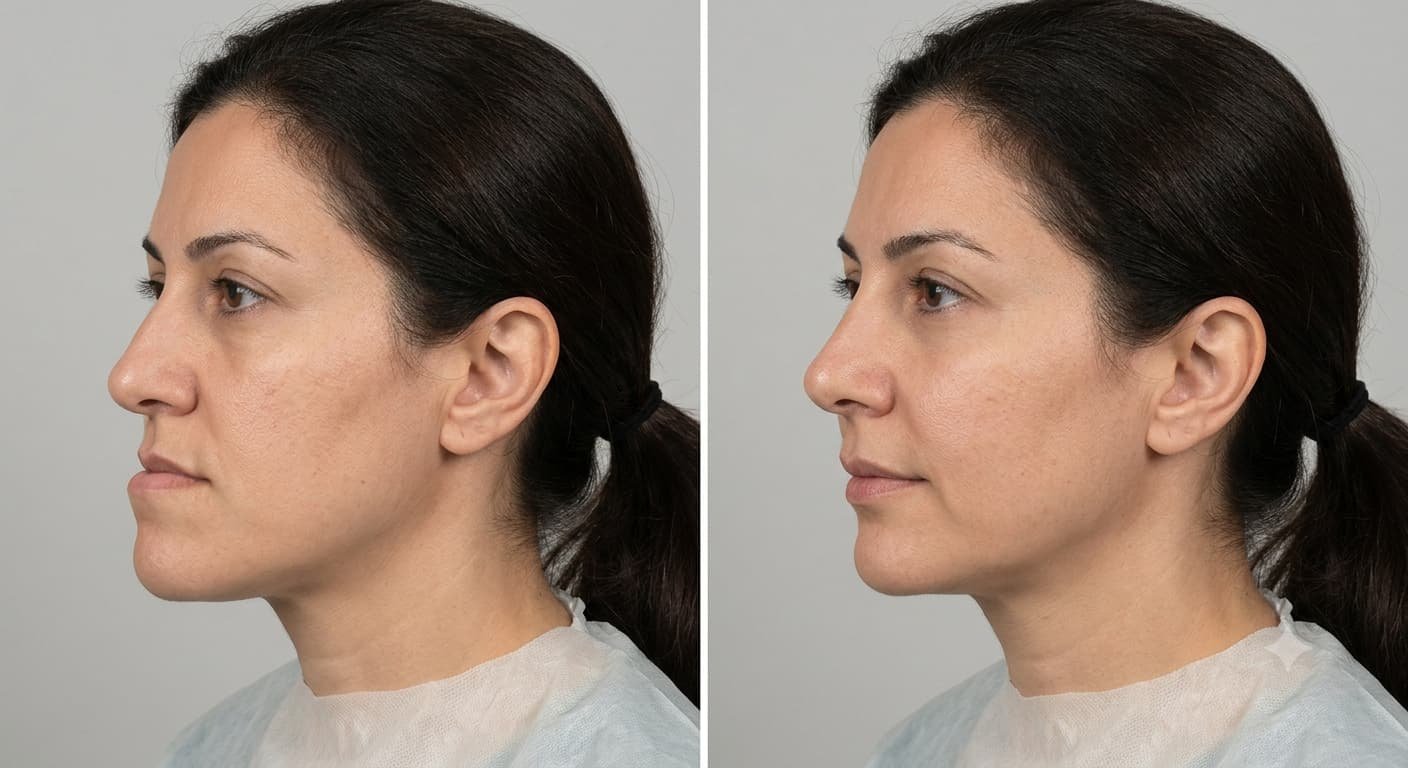
Conditions corrected by orthognathic surgery
Jaw surgery is indicated when the underlying bone structure is the cause of the problem — not the teeth. These conditions cannot be fully resolved with orthodontics alone.
Severe Underbite
Lower jaw protrudes significantly beyond the upper — causing difficulty chewing, speech problems, and facial imbalance. Surgical advancement of the upper jaw or setback of the lower jaw corrects the underlying skeletal cause.
Severe Overbite
Upper jaw protrudes excessively over the lower — often causing the lower teeth to bite into the roof of the mouth. Surgical repositioning of one or both jaws corrects the discrepancy permanently.
Crossbite
When upper teeth sit inside lower teeth on one or both sides — often causing asymmetric jaw growth, uneven wear, and TMJ discomfort. Severe skeletal crossbites require surgical correction beyond what orthodontics can achieve.
Open Bite
Upper and lower front teeth do not meet when biting — causing difficulties chewing, swallowing, and speaking. Often related to skeletal growth patterns that orthodontics alone cannot correct in adults.
Facial Asymmetry
Significant asymmetry in jaw position, chin deviation, or facial height imbalance that affects both function and appearance. Corrective surgery repositions the jaw bones to achieve symmetry and balance.
Sleep Apnoea (Skeletal)
In patients where obstructive sleep apnoea is caused by a structurally small or retroposed lower jaw, maxillomandibular advancement surgery is one of the most effective long-term interventions available.
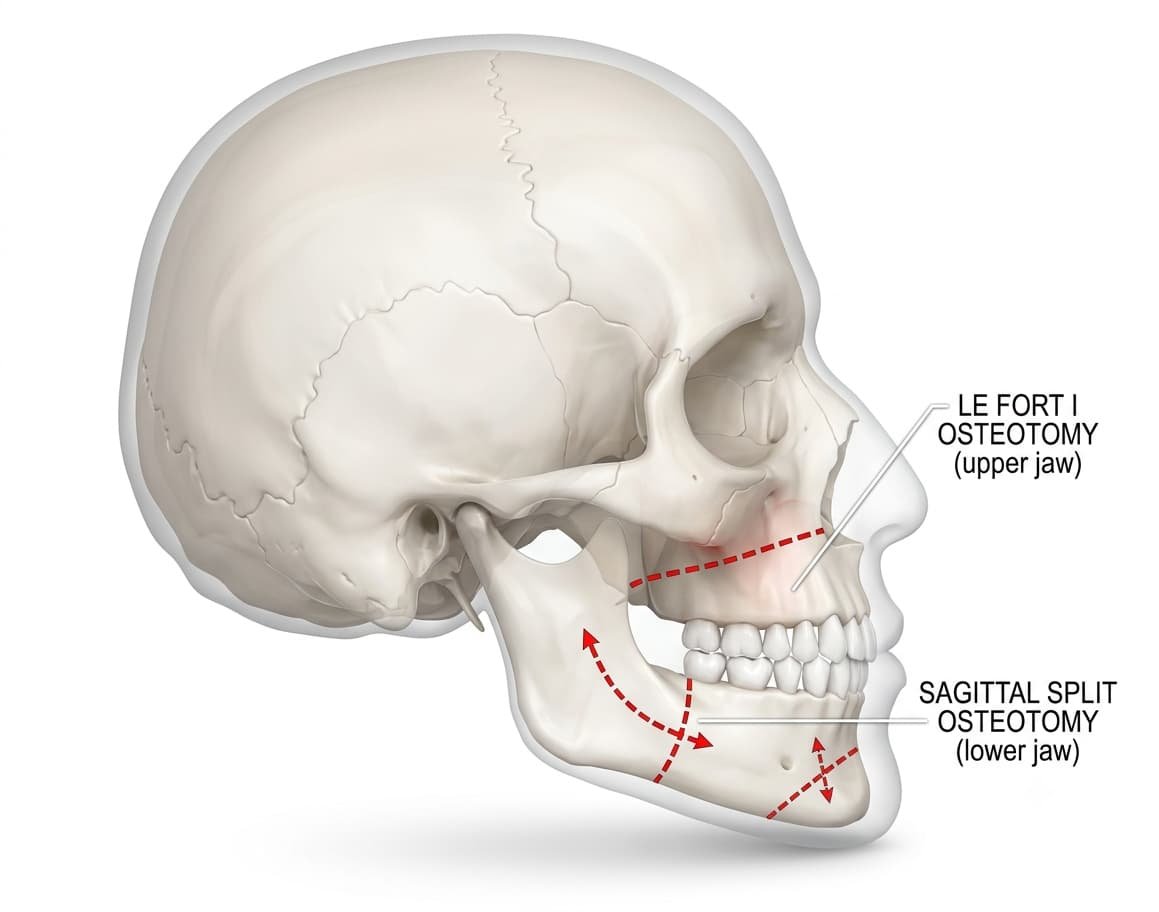
What is orthognathic surgery?
Orthognathic surgery — from the Greek orthos (straight) and gnathos (jaw) — is a category of surgical procedures that reposition the upper jaw, lower jaw, or both to correct skeletal discrepancies that affect bite function, facial appearance, and breathing.
The procedure is performed under general anaesthesia. The jaw bones are cut (osteotomised) and moved into their new, planned positions, then held in place with small titanium plates and screws. These fixation plates are not removed in most patients — they are biocompatible and do not interfere with MRI scanning. Results are permanent.
- Permanent correction — results do not relapse
- Corrects both function (bite, chewing) and aesthetics (facial profile)
- No visible external scarring — incisions inside the mouth
- Coordinated with orthodontic treatment before and after
- Titanium fixation plates — biocompatible, MRI-safe
- Save 60–65% vs equivalent surgery in Western Europe
Types of jaw surgery we perform
The specific procedure — or combination of procedures — is determined by your diagnosis, the nature of the skeletal discrepancy, and the treatment goals agreed between surgeon and orthodontist.
Le Fort I Osteotomy (Maxillary Surgery)
The upper jaw (maxilla) is separated from the skull base and repositioned — moved forward, backward, upward, or downward — to correct the occlusal plane and restore facial balance. Used for severe overbites, open bites, excessive gum show, and upper jaw deficiency. Can be combined with lower jaw surgery in the same procedure.
Sagittal Split Ramus Osteotomy (Mandibular Surgery)
The lower jaw (mandible) is divided at the ramus and advanced or set back to correct its position relative to the upper jaw. The most commonly performed jaw surgery — used for underbites, certain overbites, and asymmetry. Produces a natural facial profile change that cannot be achieved with orthodontics.
Bimaxillary Osteotomy (Double Jaw Surgery)
Le Fort I and sagittal split performed simultaneously — both upper and lower jaws repositioned in the same surgical session. The most comprehensive correction, used when the discrepancy involves both jaws, or when precise simultaneous adjustment of both jaws achieves a better functional and aesthetic result than single-jaw surgery alone.
Genioplasty (Chin Repositioning)
The chin bone is cut and repositioned — moved forward, backward, up, down, or reduced in width — to improve facial profile balance. Often combined with jaw surgery as a refinement step, or performed independently for patients who want improved chin projection without full orthognathic surgery.
Why jaw surgery always involves orthodontics
Jaw surgery does not work in isolation — it is always part of a combined orthodontic-surgical treatment plan. The orthodontic phase before surgery decompensates the teeth (removes the natural adaptations they have made to the skeletal discrepancy) so that when the jaws are repositioned surgically, the teeth fit together correctly.
Without pre-surgical orthodontics, the teeth would not align after surgery. Without surgery, orthodontics alone cannot correct a skeletal jaw discrepancy in an adult. The two are inseparable.
- 1Pre-surgical orthodontics — 9 to 14 monthsBraces or aligners align the teeth within each arch. The bite may temporarily worsen as the teeth are decompensated. This is normal and expected.
- 2Jaw surgery — 1 to 3 hours in hospitalPerformed under general anaesthesia. Hospital stay of 1 to 2 nights typically required. Initial recovery at home: 2 to 3 weeks.
- 3Post-surgical orthodontics — 3 to 6 monthsFine-tuning of the bite after the jaws have healed in their new positions. The final detailed finishing of tooth position and occlusal contacts.
- 4Retention — ongoingRetainers worn after orthodontic treatment is complete. Surgical results are permanent — bone does not relapse. Retention is for the teeth only.
Orthodontics at Kocaqi Dental
For patients planning jaw surgery, the pre- and post-surgical orthodontic phases can be completed at Kocaqi Dental using clear aligners or fixed braces — coordinated directly with the surgical planning. This means a single coordinated team manages your entire treatment journey, from orthodontic planning through surgery to final retention.
Who is suitable for jaw surgery?
Jaw surgery is appropriate for adults with skeletal jaw discrepancies that significantly affect function, appearance, or both — and that cannot be adequately resolved with orthodontics alone. A full clinical assessment and imaging are needed to confirm suitability.
Surgical treatment is indicated if you have…
- Significant skeletal underbite, overbite, crossbite, or open bite
- Jaw asymmetry affecting facial balance or function
- Difficulty chewing, biting, or swallowing due to jaw discrepancy
- Sleep apnoea related to jaw structure
- Completed facial growth — surgery after age 17 to 18
- Realistic understanding of the full treatment duration
- Commitment to the pre- and post-surgical orthodontic phases
Surgery may not be needed if you have…
- Mild to moderate bite problems — clear aligners or fixed braces may be sufficient
- Incomplete facial growth — surgery deferred until growth is complete
- Dental crowding only, without skeletal component — orthodontics alone
- Medical conditions that increase surgical risk — individually assessed
- Active smoking — healing and surgical outcomes are significantly compromised
From first consultation to final result
Jaw surgery is a comprehensive treatment journey spanning 12 to 18 months in total. Here is what each stage involves and how international patients navigate it.
Full Orthodontic & Surgical Assessment
A comprehensive assessment including clinical examination, dental photographs, facial photographs, panoramic X-ray, lateral cephalogram, and CBCT scan. The degree of skeletal discrepancy is measured, the surgical movements needed are planned digitally, and the pre-surgical orthodontic requirements are determined. The complete treatment plan — orthodontic and surgical — is presented and discussed together.
Pre-Surgical Orthodontics
Braces or clear aligners are placed to align the teeth within each arch and decompensate the bite in preparation for surgery. This phase is managed remotely for most international patients — you attend check-ups every 6 to 8 weeks either locally or at our clinic. Surgical timing is determined when the orthodontist and surgeon both confirm readiness.
Orthognathic Surgery
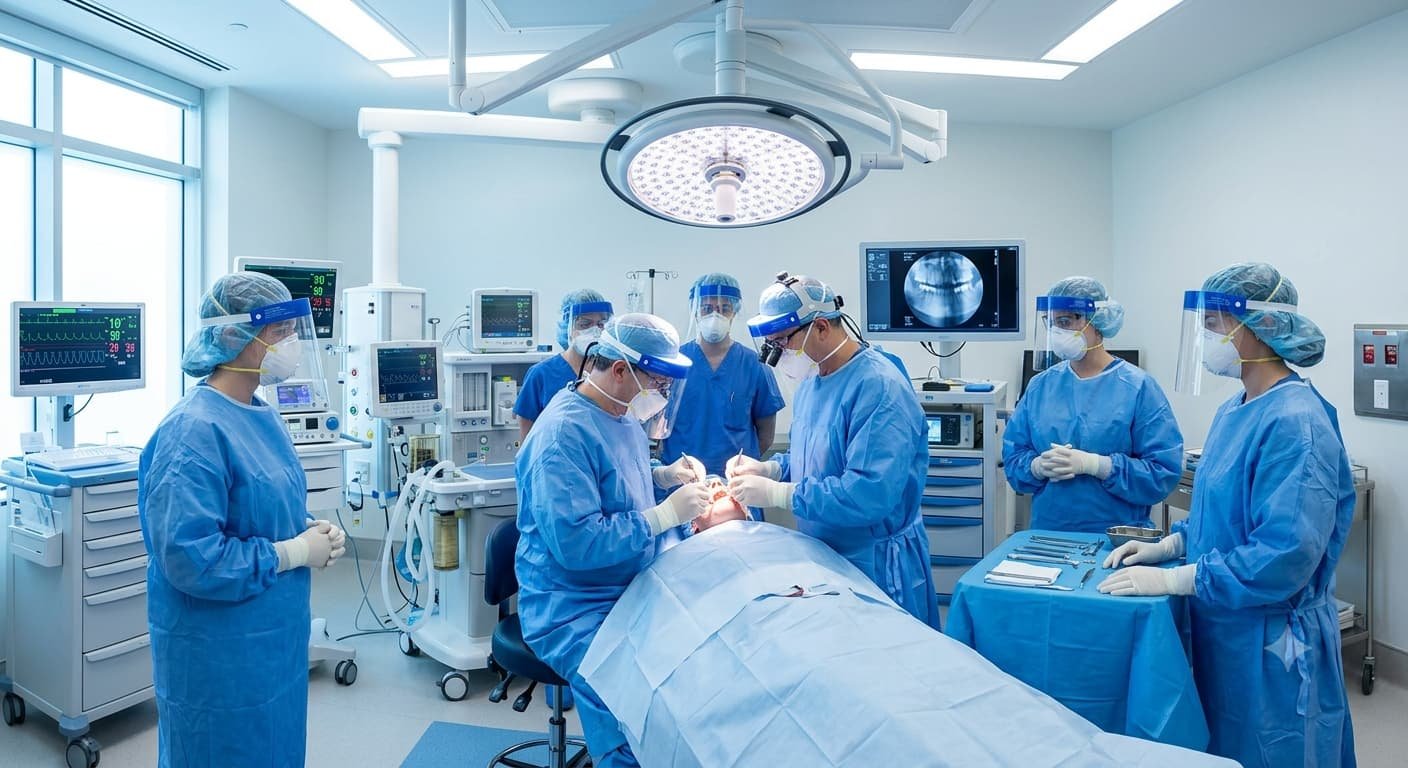
Performed under general anaesthesia with all incisions inside the mouth — no external scarring. The jaw bones are repositioned according to the pre-planned surgical movements and fixed with small titanium plates and screws. Hospital stay is typically 1 to 2 nights. Soft-food diet for 6 to 8 weeks post-surgery. Most patients return to work or study within 2 to 3 weeks of surgery.
Post-Surgical Orthodontics & Retention
Once the surgical swelling has resolved and the jaws have healed — typically 6 to 8 weeks post-surgery — orthodontic treatment resumes to fine-tune the bite and achieve the final tooth positions. This phase is shorter and more straightforward than the pre-surgical phase. Treatment ends with retainer fitting — the surgical result itself is permanent.
Jaw Surgery Cost in Albania
Orthognathic surgery is priced individually based on the procedure required — single jaw or double jaw — and the complexity of the case. Orthodontic fees are separate and depend on the chosen appliance and treatment duration. Below are indicative ranges.
Single Jaw Surgery
~65% vs Western Europe Get a quote €8,000 – €15,000 in Western EuropeUpper jaw (Le Fort I) or lower jaw (sagittal split) only. Suitable for cases where the discrepancy involves one jaw primarily. Includes surgical fee, anaesthesia, hospital stay, fixation plates, and follow-up.
Double Jaw Surgery (Bimaxillary)
~65% vs Western Europe Get a quote €14,000 – €25,000 in Western EuropeBoth upper and lower jaw repositioned in a single surgical session. For complex skeletal discrepancies requiring movement of both jaws. Often combined with genioplasty. Includes all surgical, anaesthetic, and hospital components.
Orthodontic fees (pre- and post-surgical phases) are quoted separately based on the chosen appliance (clear aligners or fixed braces) and estimated treatment duration. A full itemised quote covering both orthodontic and surgical costs is provided at your initial assessment appointment. No hidden fees. All costs confirmed in writing before treatment begins.
Why patients choose Kocaqi for jaw surgery
Coordinated Orthodontic & Surgical Team
Pre-surgical orthodontics, surgical planning, the surgery itself, and post-surgical orthodontics are coordinated by a single integrated team. No gaps between providers, no conflicting treatment plans — orthodontist and surgeon work from the same digital model throughout.
Digital Surgical Planning
3D CBCT imaging and digital planning software allow the surgical movements to be simulated and refined virtually before any incision is made. You can see a preview of your expected facial profile change before committing to treatment.
25+ Years of Experience
The surgical team has performed orthognathic surgery cases for over 25 years, including complex bimaxillary procedures and genioplasties. Jaw surgery outcome depends critically on surgical expertise — experience in this specific procedure is non-negotiable.
Remote Management Between Phases
For international patients, the extended pre-surgical orthodontic phase can be managed with periodic visits — monthly or bi-monthly — rather than requiring permanent relocation. We work with your local dental team when needed and manage all coordination centrally.
Significant Cost Advantage
Orthognathic surgery in the UK, Germany, or Switzerland typically costs €14,000 to €25,000 for bimaxillary procedures. Treatment at Kocaqi Dental offers savings of 60 to 65% — making life-changing surgery accessible without compromising on quality or safety.
Honest Case Assessment
Not every patient seeking jaw surgery actually needs it. If your case can be well-managed with orthodontics alone, we will tell you so. We recommend surgery only when it is genuinely the appropriate — and most effective — solution for your specific skeletal situation.
Jaw surgery — your questions answered
How long does jaw surgery recovery take?
Initial recovery — when most swelling and discomfort resolve — takes 2 to 3 weeks. Most patients return to work or study within this period. Full resolution of swelling takes 3 to 6 months, during which the final aesthetic result gradually becomes visible. A soft-food diet is maintained for the first 6 to 8 weeks post-surgery. Physical contact sports are restricted for 3 months.
Is jaw surgery painful?
The procedure is performed under general anaesthesia — you are asleep throughout. Post-surgical discomfort is managed with prescribed pain relief and is typically described as pressure, tightness, and numbness rather than sharp pain. The most uncomfortable period is days 2 to 5. By the end of the first week, most patients are managing comfortably on over-the-counter pain relief only.
Will I have visible scars from jaw surgery?
No external incisions are made in standard orthognathic surgery. All cuts are made inside the mouth — between the gum and the lip, or along the gum line. There are no external scars on the face or neck. Some bruising and swelling is visible externally in the days after surgery, but this resolves completely.
Do the titanium plates and screws need to be removed?
In most cases, no. The titanium fixation plates and screws used are small, biocompatible, and MRI-safe — they do not need to be removed in the majority of patients. Removal is only considered if a plate causes discomfort, infection, or palpability, which occurs in a small minority of cases. Removal, if needed, is a straightforward minor procedure under local anaesthesia.
Can jaw surgery fix sleep apnoea?
Maxillomandibular advancement (MMA) surgery — advancing both upper and lower jaws forward — is one of the most effective surgical treatments for obstructive sleep apnoea caused by skeletal jaw anatomy. It enlarges the airway space directly by moving the structures that restrict it. The decision to pursue surgical treatment for sleep apnoea involves specialist sleep medicine assessment alongside surgical evaluation, which we coordinate as part of the treatment planning process.
Can the results of jaw surgery change over time?
The bone movements achieved in orthognathic surgery are stable and permanent. Unlike orthodontic treatment, where teeth have a tendency to relapse without retainers, the repositioned jaw bones consolidate and remain in their corrected positions long-term. Post-surgical orthodontic retention is worn to maintain the tooth positions — not the surgical result, which is self-sustaining once healed.
Start your jaw surgery journey with a free consultation
Send us your existing X-rays or simply a description of your concern. We'll assess whether orthognathic surgery is appropriate, outline the full treatment plan, and provide a complete cost estimate — free, with no obligation.
Orthognathic surgery · Digital planning · Coordinated orthodontics · Save 65% · Full treatment under one roof