
Dental Crowns in Tirana, Albania
Protect and restore damaged, broken, or heavily filled teeth with custom-made E-max, Zirconia, or PFM crowns — crafted in our in-house laboratory and placed by a specialist team with 25+ years of experience.
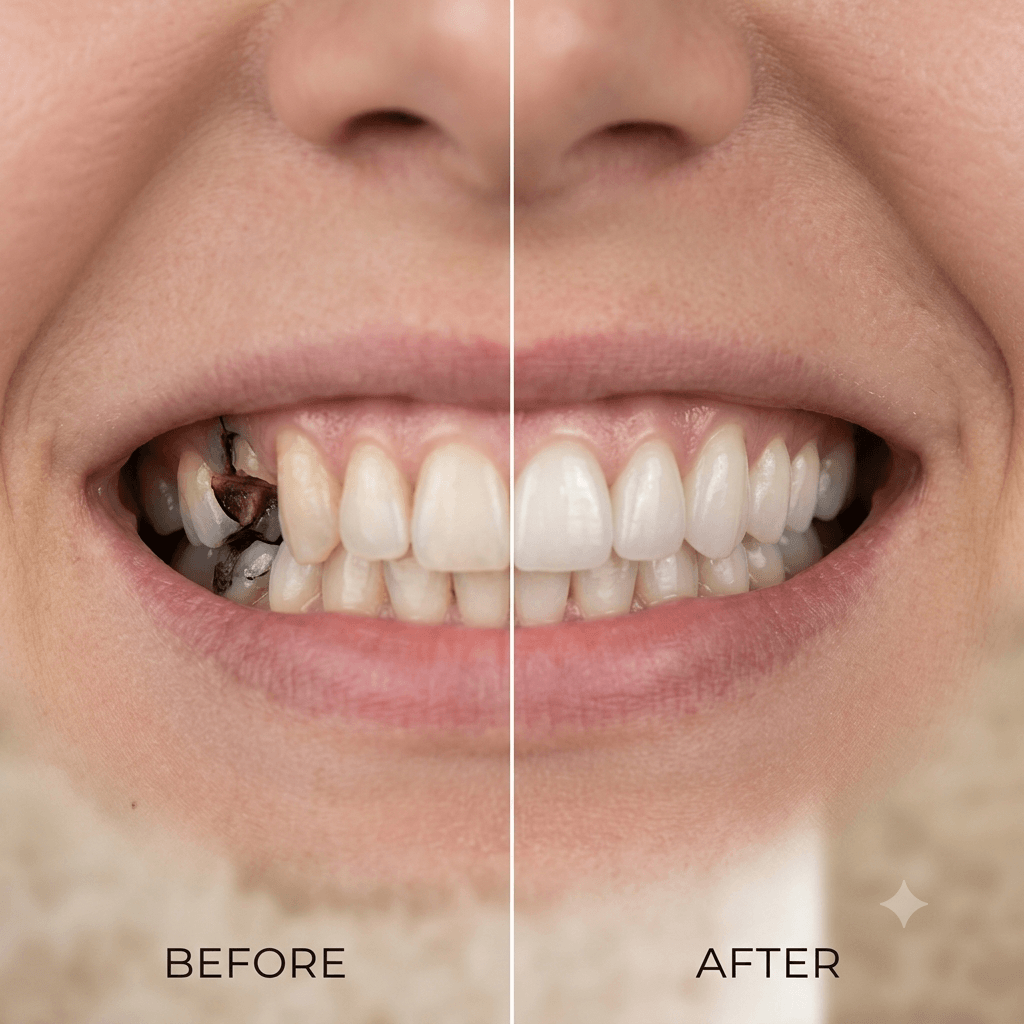
When a tooth needs more than a filling
A filling repairs. A crown protects. When a tooth is too damaged, too weak, or too compromised for a filling to hold, a crown is the definitive solution that restores function, appearance, and long-term structural integrity.
Severely Broken or Cracked Tooth
A fracture too large for a filling to span — or a crack that extends towards the root and threatens the tooth's survival.
Tooth After Root Canal
Root-treated teeth lose moisture and structural strength over time — a crown is nearly always needed to prevent fracture and protect the investment of treatment.
Large Failing Fillings
Old or oversized fillings that leave insufficient sound tooth structure — the tooth is structurally at risk and the filling cannot be replaced with another filling.
Severe Wear or Erosion
Teeth that have been worn down by bruxism or acid erosion to the point where their height, shape, and bite can no longer be restored with composite alone.
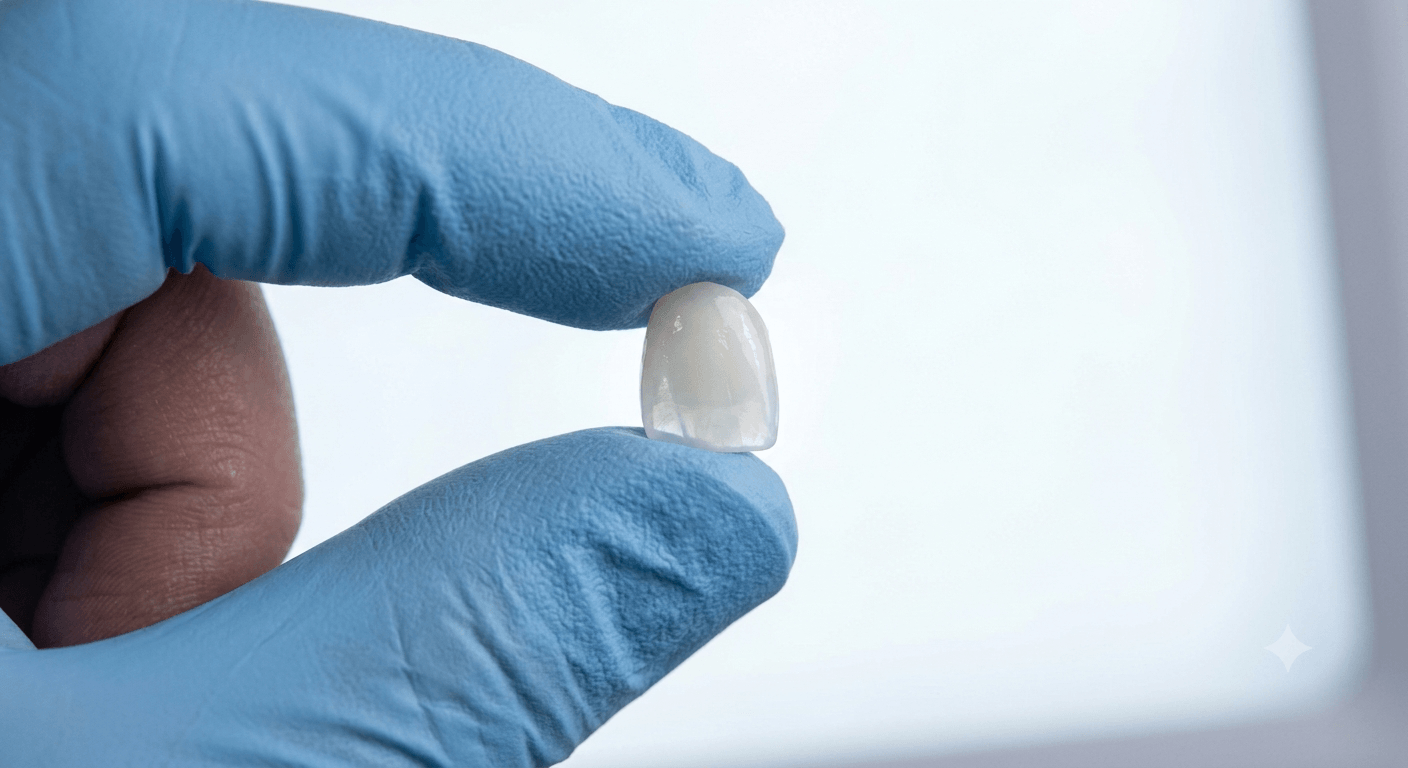
What is a dental crown?
A dental crown — also called a cap — is a custom-made restoration that covers the entire visible portion of a tooth above the gum line. It restores the tooth's original shape, size, strength, and appearance, distributing biting forces evenly across the full surface rather than concentrating stress at vulnerable points.
Unlike a filling, which fills a cavity from within, a crown encases the tooth entirely — protecting it from further fracture, sealing it from bacterial ingress, and restoring full function. A well-placed crown on a properly prepared tooth can last 15 years or more.
- Full structural protection — prevents fracture of weakened teeth
- Custom-made to match your natural tooth shape and colour
- Fabricated in our in-house laboratory — same-trip delivery
- Used on natural teeth and on dental implants
- E-max, Zirconia, or PFM — material selected for your specific case
- 5-year written guarantee on all restorations
Three materials — one right choice for every case
The material we recommend for your crown depends on which tooth is being restored, the biting forces it will bear, and how much natural tooth structure remains. We discuss all three options transparently during your consultation.
E-max (Lithium Disilicate)
The most aesthetic crown material available. E-max ceramic transmits light in the same way natural enamel does — making it virtually indistinguishable from a natural tooth in the smile zone. Excellent strength for anterior teeth with moderate biting forces.
Full Zirconia
Maximum strength and fracture resistance — the preferred material for posterior teeth that bear the highest biting loads. Modern high-translucency zirconia also delivers excellent aesthetics, making it suitable for visible premolars and even anterior cases requiring maximum durability.
PFM (Porcelain Fused to Metal)
The traditional crown material — a metal substructure with a porcelain outer layer. More affordable than all-ceramic options and highly durable. The grey metal margin can become visible at the gum line over time, making PFM less ideal for prominent front teeth. Still a clinically valid choice for back teeth.
Six situations where a crown is the right treatment
Crowns are one of the most versatile restorations in dentistry — used in both functional and cosmetic contexts across a wide range of clinical situations.
After Root Canal Treatment
Root-treated teeth are brittle and prone to vertical fracture. A crown is the standard of care following root canal treatment on any molar or premolar — protecting the tooth for decades rather than risking a fracture that could require extraction.
Fractured or Cracked Tooth
A crown splints the remaining fragments together and prevents crack propagation. For cracked-tooth syndrome, a crown placed early often saves a tooth that would otherwise require extraction.
On a Dental Implant
Every single tooth implant requires a crown on top. Zirconia is the preferred material for implant crowns — strength, aesthetics, and compatibility with titanium abutments in a single restoration.
Severely Discoloured Teeth
When discolouration is intrinsic and too deep for veneers to cover adequately — or when the tooth also has structural issues — a full crown addresses both concerns simultaneously.
Dental Bridge Abutments
A traditional dental bridge uses crowns on the teeth either side of a gap to support the false tooth in between. The quality of the abutment crowns determines the longevity and fit of the entire bridge.
Severe Wear or Erosion
When teeth have lost significant height due to bruxism or acid erosion, crowns rebuild the vertical dimension of the bite — restoring both function and facial aesthetics that have been progressively lost.
Crowns on dental implants — what's different?
An implant crown sits on a titanium abutment rather than a natural tooth — which changes how it is designed, how it is retained, and which material is selected. At Kocaqi Dental, implant crowns are fabricated in-house alongside the implant planning process, ensuring a perfect fit from day one.
Implant crowns do not decay. They do not require root canal treatment. With proper care and hygiene around the implant, they can last the lifetime of the implant itself. The crown is the visible, aesthetic component — the investment in quality here directly determines how natural and durable your final result is.
Learn more about dental implants →The dental crown procedure at Kocaqi Dental
From your first message to your finished crown — here is exactly what the process looks like, including how it fits within a single trip to Tirana.
Online Consultation & Photo Review
Send us photographs and any existing X-rays of the tooth requiring a crown. We confirm whether a crown is clinically appropriate, recommend the most suitable material, and provide a transparent written quote within 24 to 48 hours. If additional treatment is needed before crowning (such as a root canal or post placement), this is identified and included in your quote at this stage.
Full Examination & X-Rays
Your first appointment includes a comprehensive clinical examination, periapical X-rays of the tooth, and an assessment of the gum health and bone support around it. We confirm the treatment plan, discuss material options, and address any preparatory needs — such as crown lengthening or core build-up — before preparation begins.
Tooth Preparation & Temporary Crown
Under local anaesthesia, the tooth is shaped to create the precise clearance needed for the crown material — typically 1.0 to 2.0 mm depending on the material selected. A digital intraoral scan captures the prepared tooth and the surrounding bite with sub-millimetre accuracy. A well-fitting temporary crown is placed the same day to protect the tooth and maintain appearance while the permanent crown is fabricated.
In-House Crown Fabrication
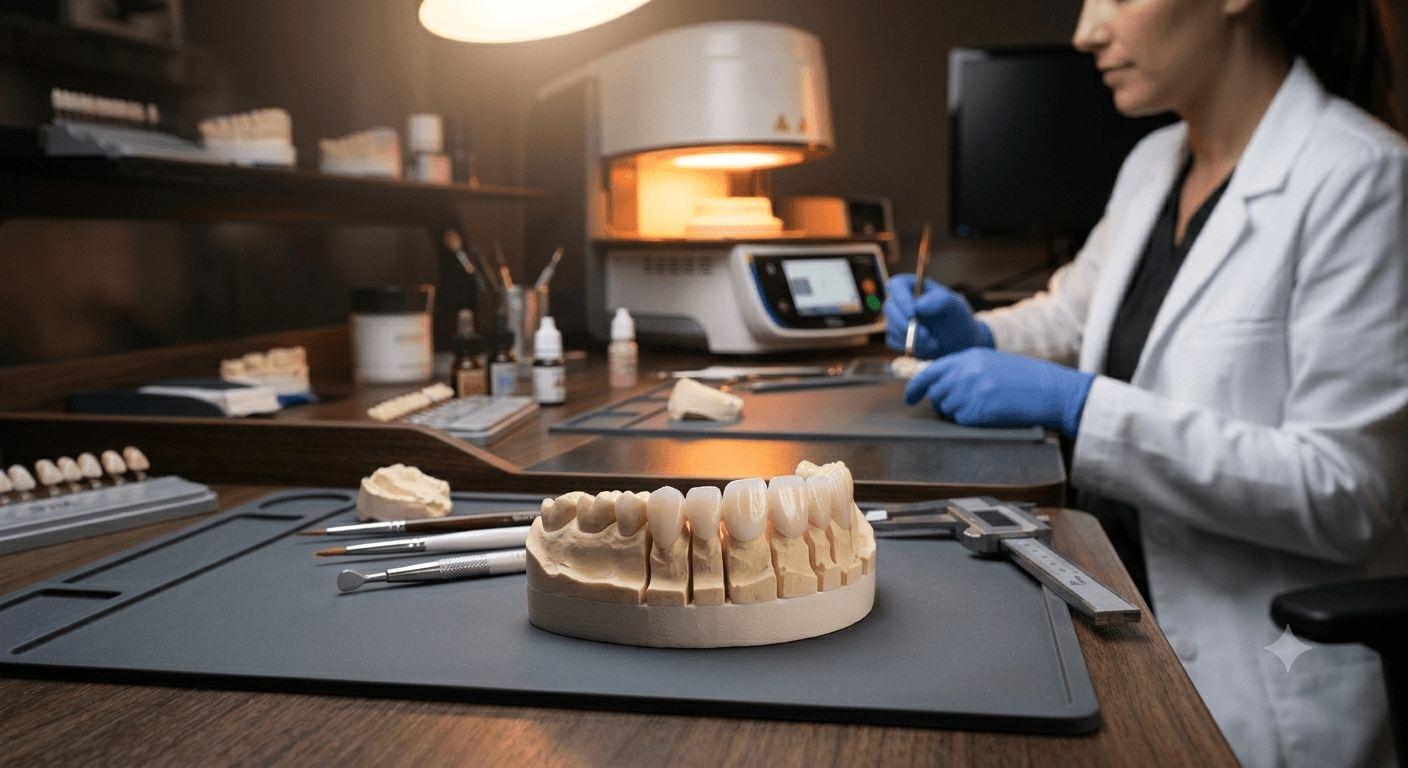
Your crown is fabricated in our on-site laboratory by our senior dental technician using your digital scan data. Working in-house means the dentist and technician communicate directly — any adjustments to shade, contour, or marginal fit are addressed immediately without the delays and communication gaps of an external lab. You are free to explore Tirana during fabrication.
Crown Fitting & Permanent Cementation
The permanent crown is tried in dry first — checked for fit, contacts, shade, and bite before any cement is used. Once you and your dentist are satisfied with every detail, the crown is permanently cemented with a high-strength resin cement. Bite is carefully adjusted and polished. You leave with a fully finished, permanent restoration.
Dental Crown Cost in Albania
Crown pricing depends on the material selected and the clinical complexity of the case. All prices below include preparation, temporary crown, in-house fabrication, cementation, and follow-up — with no hidden costs.
| Crown Type | Kocaqi — Tirana | Western Europe avg. | Saving |
|---|---|---|---|
| E-max Porcelain Crown | from €180 | €700 – €1,200 | ~75% |
| Full Zirconia Crown | from €200 | €700 – €1,200 | ~75% |
| PFM Crown (Porcelain-Fused-to-Metal) | from €130 | €500 – €900 | ~75% |
| Implant Crown (Zirconia on abutment) | from €220 | €800 – €1,400 | ~75% |
| Crown + Root Canal package | Get a quote | €1,200 – €2,200 | ~70% |
Prices shown are starting points per unit. Cases requiring core build-up, post placement, or crown lengthening are quoted individually. Your full written quote — confirmed before treatment begins — covers every element of your specific case with no additional fees.
Why patients choose Kocaqi for dental crowns
In-House Laboratory
Your crown is fabricated on-site by our dedicated dental technician. Direct dentist-technician communication means adjustments to shade, contour, and fit happen in hours, not days. No outsourcing, no delays, no quality compromise.
Digital Intraoral Scanning
No impression trays. A digital scan captures the prepared tooth with sub-millimetre precision — producing a crown with a marginal fit that reduces the risk of recurrent decay and cement failure over the long term.
5-year Written Guarantee
All crowns placed at Kocaqi Dental carry a formal 5-year written guarantee against material failure and cementation issues. This guarantee is documented in your patient record and valid regardless of where you live.
Honest Material Recommendation
We explain the clinical rationale for every material recommendation — and we never recommend a more expensive material unless there is a clear clinical reason for it. E-max, Zirconia, or PFM: you understand exactly why we chose what we chose.
Complete Treatment Under One Roof
Root canal, post placement, crown lengthening, and crown cementation — all performed in-house by the same coordinated team. No referrals, no hand-offs, no records lost between providers.
Finished in 5 Days — One Trip
From preparation to permanent cementation in a single visit of 4 to 5 days. Patients travelling from the UK, Germany, Switzerland, or Italy typically arrive Sunday and leave Thursday with their crown fully placed and guaranteed.
Dental crowns — your questions answered
How long do dental crowns last?
E-max and Zirconia crowns typically last 15 years or longer with proper oral hygiene and regular check-ups. PFM crowns average 10 to 15 years. The factors most affecting longevity are oral hygiene around the crown margin, biting habits (bruxism significantly reduces lifespan), and the quality of the original preparation and cementation. All crowns at Kocaqi Dental carry a 5-year written guarantee.
Does getting a crown hurt?
The preparation appointment is performed under local anaesthesia and is essentially painless. Some sensitivity on the prepared tooth while the temporary is in place is normal — particularly to cold — and resolves once the permanent crown is cemented. If the tooth required a root canal before crowning, there is no nerve remaining and no sensitivity at all after treatment.
Do I always need a crown after a root canal?
For molars and premolars — yes, almost always. These teeth bear heavy biting forces and, once root-treated, lose the moisture and flexibility that protects them from vertical fracture. A crown placed promptly after root canal treatment can protect the tooth for decades. Front teeth are sometimes restored with a less invasive option depending on how much natural structure remains, but a crown is still the safest long-term solution for heavily filled anterior teeth.
Zirconia or E-max — which should I choose?
For front teeth where aesthetics are the priority: E-max. Its light transmission properties make it the most natural-looking crown material available. For back teeth bearing high biting forces, or for patients with bruxism: Zirconia. Its fracture resistance is significantly higher. For implant crowns: Zirconia in most cases. We discuss both options during your consultation and make a clinical recommendation — which you are free to accept or override based on your own priorities.
Can a crown fall off? What do I do?
A properly cemented crown on a well-prepared tooth very rarely falls off. If it does occur — usually due to the underlying tooth structure deteriorating or the cement film failing — contact us immediately via WhatsApp with a photograph. Keep the crown safe. In many cases it can be re-cemented. If the underlying tooth has changed, we assess remotely and arrange the most efficient resolution, which in most cases does not require an emergency trip.
How many teeth can I have crowned in one visit?
There is no fixed limit. Multiple crowns can be prepared, temporised, and cemented in a single trip to Tirana — a significant practical advantage for international patients. Cases involving 4, 6, or even 8 crowns in one visit are routine for dental tourists. We coordinate the sequence of appointments to complete as much as possible within your available time.
Get a crown fitted — in one trip, with a 5-year guarantee
Send us photos and any existing X-rays of the tooth you need treated. We'll confirm the right material, outline the full procedure, and provide a transparent written quote within 24 to 48 hours — free and with no obligation.
E-max · Zirconia · PFM · In-house lab · 5-year guarantee · Save up to 70%